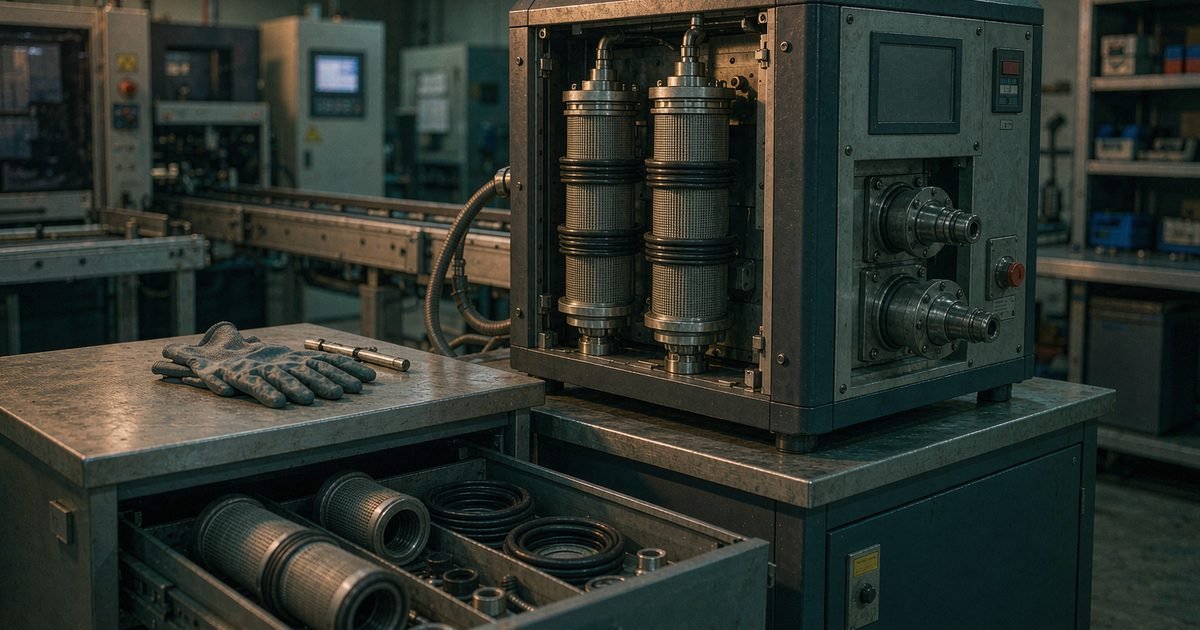
A twelve-month warranty reads the same on every quotation. The differences surface a year later, when a filter cartridge is loaded, a seal is weeping, and the line is idle while the SMT machine spare parts it needs are located. Split the purchase into two lists before you sign: what the warranty commits to, and what your process consumes regardless of whose warranty it is.
The basis for both lists is published. CHUANGQI cleaning machines carry a 12-month warranty, and service beyond that term is scoped per quotation. The catalog spans 22 machine models across five product lines, and the CQ-C730S screen cleaning machine’s spec sheet names its three filter cartridges outright — 10 µm, 5 µm and 1 µm — each a scheduled consumable. Part and pricing requests come back within 24 hours.
Key takeaways
- CHUANGQI cleaning machines carry a 12-month warranty.
- Service beyond the warranty term is scoped per quotation.
- The CQ-C730S spec names three filter cartridges: 10, 5 and 1 µm.
- Stock consumables against downtime cost, not part price.
- RFQ and technical responses return within 24 hours.
Start From What the 12-Month Warranty Actually Commits To
Scope note. This guide covers the water-based and spray-in-basket machines in the CHUANGQI range; part names below follow the English manuals shipped with each unit.
A warranty commits the manufacturer to the machine as delivered: components that fail from materials or workmanship inside the warranty term are the factory’s to make right. What it cannot do is absorb the parts your process wears out by running. Filter cartridges trap what your flux and your water put there; seals and spray nozzles age with every cycle. That category belongs to operating cost, whoever supplies the machine.
So treat the warranty clause as a scoping exercise, not a slogan. Ask the supplier to state in writing what the 12-month term includes, what it excludes, and on what basis service beyond the term is quoted. With CHUANGQI the answer is already fixed: service beyond the warranty term is scoped per quotation, so there are no hidden standard clauses to discover later. The same request should get you the English manual and the spare-parts section inside it — CHUANGQI ships English manuals with every machine and backs them with lifetime remote support, which is where the part numbers you will order against actually live.
Map Consumables and Wear Parts per Machine Family
Wear concentrates where the process does work: where fluid is forced through openings, where media contact surfaces, where seals flex. The table sorts the CHUANGQI range by machine family and the items each family consumes.
| Machine family | Consumables and wear items | What wear shows up as |
|---|---|---|
| Stencil washers (CQ-C730S, CQ-C730) | Three-stage filtration: 10 µm for debris and labels, then 5 µm and 1 µm for solder-paste and rosin particles | Particles returning to the basket; rinse turning pasty between shifts |
| PCBA washers (inline and offline) | Water-based cleaning fluid, filtration cartridges, rinse-stage media | Bath chemistry drifting batch to batch; rinse quality settling |
| Brushing line (CQ-C760) | Brush stages and their contact media | Uneven cleaning bands across the panel |
| Nozzle and fixture washers (CQ-C716, CQ-C756) | Spray nozzles, pump and door seals, basket contact parts | Pressure decay at the manifold; wet marks after the dry stage |
Source: CHUANGQI published product specifications and machine manuals, October 2026. Order by part number, not by description.
Build a Stocking List That Matches Your Downtime Cost
A warranty does not replace a stocking plan. A worn cartridge stops production whether or not the part is covered, so the list you keep on site should follow downtime, not price:
- Filtration cartridges — for a stencil washer like the CQ-C730S, the published spec runs three stages (10, 5 and 1 µm; exact part numbers follow the manual shipped with your machine); the fine stage is the one that decides rinse quality, so it belongs in the cabinet, not on a reorder form.
- Wash fluid — water-based concentrate is the item your process consumes in the largest volume; a sealed drum per machine beats a purchase order per week.
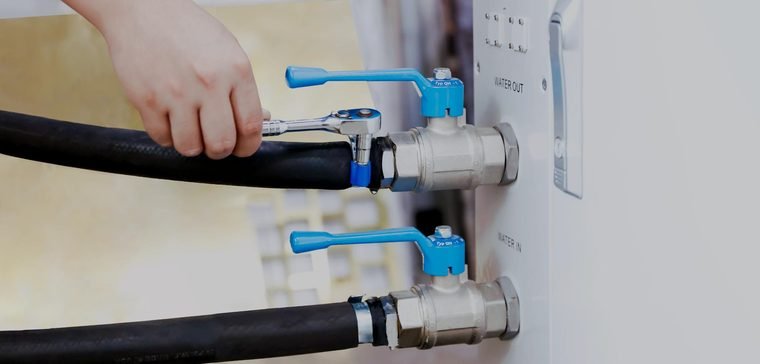
- Seals and spray nozzles — low unit cost, long lead time when guessed at; one set per machine on the shelf covers the most common service stop.
- Contact parts — baskets, fixtures and brush media wear with handling; stock to your changeover frequency, not to a calendar.
One boundary is worth stating plainly: a generic stocking list copied from a brochure is not suitable for a regulated line. Derive yours from the spare-parts section of your machine’s manual and from your own maintenance log — consumption depends on shift count, flux load and water quality, and those are measured at your site, not at the factory.
Order and Verify: What to Send, What Comes Back
Ordering is a four-line email when the manual is at hand: machine model and serial number, the part number from the manual, a photo of the worn item, and the quantity. CHUANGQI returns part and pricing information within 24 hours, quotes in the same channel, and documents every part against the same build standard the factory applies when it tests each machine before shipment — the unit that arrives runs the same routine that validated yours.
If you are reviewing warranty terms or building the stocking list for a line, send the machine model and your maintenance interval and we will return a parts proposal with the quotation — quote within 24 hours. The upkeep side of the same topic is covered in the maintenance schedule guide, the buying checklist in the import and OEM guide, and the full range is listed on the products page.
FAQ
What does the 12-month warranty include?
It covers the machine as delivered against defects in materials and workmanship for twelve months. Items the process consumes — filter media, fluid, wear contacts — are operating cost, and service beyond the warranty term is scoped per quotation so the boundary is explicit rather than assumed.
How do I order the right spare part for my machine?
Send the machine model and serial number plus the part number from the manual’s spare-parts section; a photo of the worn item settles any doubt. Requests come back within 24 hours with the matching part and its quotation.
Which consumables should we keep on site?
Whatever stops your line for the longest time relative to its price: fine-stage filter cartridges, wash fluid, and one set of seals and spray nozzles per machine. Weight the list by your shift pattern and flux load, which is what actually sets consumption.
Why three filtration stages instead of one?
The stages divide the work: 10 µm catches debris and label fragments, 5 µm and 1 µm catch solder-paste and rosin particles in descending size. A single coarse stage would let fines recirculate, which is what shows up as pasty rinse and dull boards.