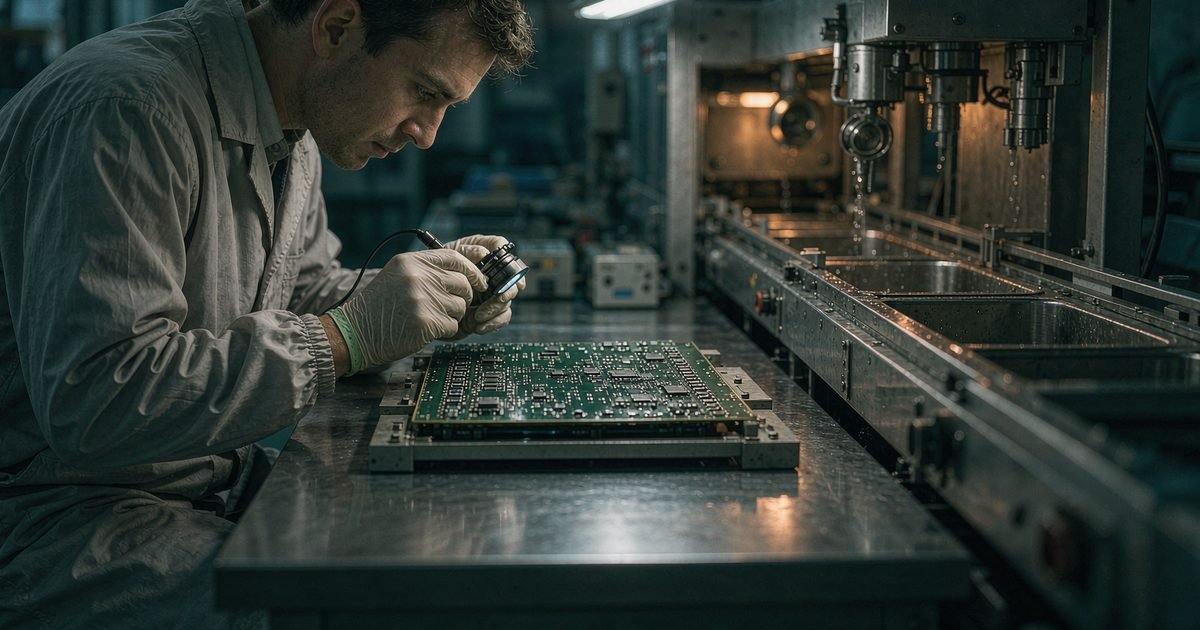
You cannot tell whether a cleaning machine will clean your boards from a specification sheet, because the sheet describes a machine, not your flux, your component spacing and your customer’s cleanliness requirement. The way to close that gap is a sample cleaning test: send your own production boards, and let the returned result — not the sales pitch — decide the purchase.
CHUANGQI runs that test on customer boards at no charge, with no purchase obligation, and answers every request within 24 hours. What comes back is a before-and-after video of the wash, a cleaning report on your panels, and a machine recommendation sized to what your boards actually need. That is the whole idea: you evaluate the outcome on your own product, before any money moves.
Key takeaways
- Send your own boards: a sample test proves the machine on your flux, not on a brochure.
- A standard trial returns three deliverables: before-and-after video, a cleaning report, a machine recommendation.
- Reply within 24 hours, no purchase obligation — the trial itself is free of charge.
- Visual cleanliness and ionic cleanliness are different claims; only your customer’s spec decides which one counts.
- Not the right first step if your boards are already coated and cured — coating changes the problem.
What a Sample Test Actually Proves
This guide is written for buyers evaluating a cleaning machine before committing capital, and the process it describes is standard for water-based PCBA cleaning: wash, DI-water rinse and hot-air dry in one closed loop. It covers what a trial can and cannot establish — not the chemistry of a specific flux, which depends on your process.
Definition. A sample cleaning test is a supervised trial in which the supplier runs your boards through a reference machine and reports the result against the criterion you name.
Why it matters. Selection data you can act on has to come from your own product. A board with tall connectors, low-standoff QFNs and a water-soluble flux behaves differently from the demo panel in a trade-show video, and no catalogue number captures that difference.
Actionable step. Before you send anything, write down the one result that would make you say yes — a specific residue gone, a visual defect solved, a measurement from your customer’s method coming back in range. A trial with no target becomes a pleasant video with no decision attached.
What the test does not prove is worth stating plainly, because it is where buyers get surprised. A trial on a handful of boards is a process demonstration, not a production qualification: it shows the machine can reach the result under controlled conditions, and it cannot by itself certify that your line will hold that result across every shift, bath age and operator. That second question — stability over time — is answered later, after installation, with the verification routine your customer agreed to. Read the trial as the first yes, not the last one.
Brochure Specs vs Your Boards: Where the Difference Shows
Every supplier makes the same three promises: it cleans thoroughly, it does not damage parts, it fits your line. The trial is the instrument that tells you which of those you can actually check — and which you will only ever be able to take on trust.
| What a supplier claims | What a trial lets you verify | What no trial can settle for you |
|---|---|---|
| Residue is removed from your flux type | Whether the specific flux on your boards is gone after one pass, judged by the method you name | Whether every future batch of that flux behaves the same — that is a chemistry control question, not a machine one |
| Boards are not damaged | Whether your sensitive parts survive the wash, rinse and dry cycle on your panel | Long-term wear from repeated cleaning over years of production |
| Cleanliness meets your requirement | Whether the result lands inside the criterion you wrote down before the test | Whether that criterion is the right one — your customer owns that decision |
| Throughput fits your output | Whether your real panel size and loading pattern pass through in a sensible cycle | Whether your peak daily volume keeps the station off the bottleneck list |
Source: CHUANGQI sample-test process, 2026-10.
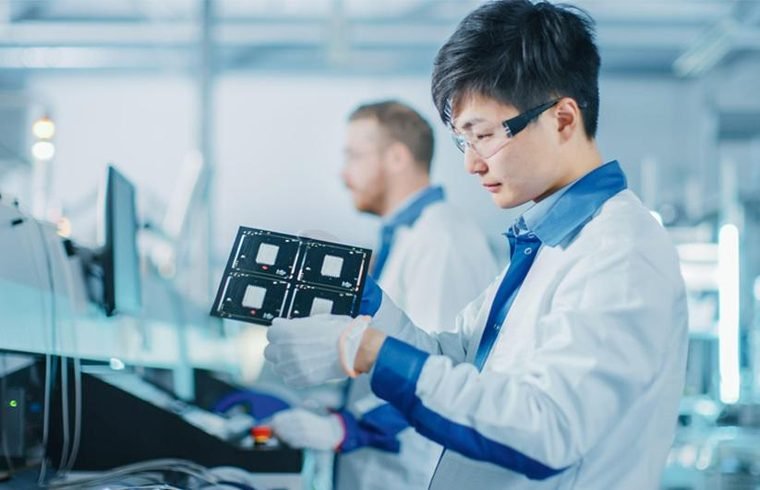
The pattern is consistent: a trial settles questions about your boards and leaves questions about your production system to be answered after you own the machine. Knowing which is which keeps you from treating a successful test as a guarantee it was never meant to be.
What to Send and What Comes Back
The quality of the result tracks the quality of the sample pack. Six items turn a vague request into a test someone can actually run and report on.
- Boards or panels that carry your real process. The dirtiest product you run is more informative than the cleanest demo piece.
- Flux type and soldering process — no-clean, rosin or water-soluble, and whether reflow or wave soldering dominates.
- The cleanliness criterion you are being held to. If your customer named a figure and a method, send both.
- Component concerns — parts you are worried about surviving the wash, and any low-standoff areas where residue likes to hide.
- Board and panel dimensions, including the largest carrier that has to pass through the chamber.
- Whether conformal coating follows cleaning, since that changes what the result needs to look like.
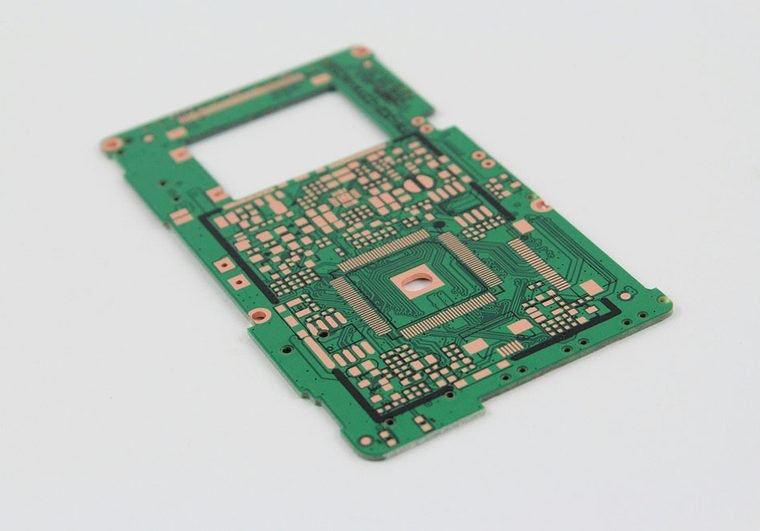
What comes back is deliberately narrow. CHUANGQI returns a before-and-after video of the wash, a cleaning report on your panels, and a machine recommendation — three deliverables, no purchase obligation, and a reply within 24 hours. The test itself is free of charge. Logistics for getting the boards to us are confirmed with you before you ship, and the shipping arrangements are settled case by case rather than assumed: if you need those details spelled out, ask before sending, so nothing sits in transit waiting on a decision.
Two links are worth keeping open while you assemble the pack. If your criterion is still unsettled, our guide to setting a PCBA cleanliness acceptance line walks through how those lines get set per product rather than read off a universal table. When you are ready to turn the trial outcome into a firm order, how to write an RFQ that gets an accurate quote shows which details shrink the back-and-forth.
When your production volume is the open question rather than the cleaning result, the machine itself has room to move: CHUANGQI builds both offline batch washers and the inline PCBA water cleaning machine, so a trial can be run on the configuration that matches your actual output instead of on a fixed demo unit.
Frequently asked questions
Is the sample cleaning test really free?
Yes. The sample test is offered free of charge and carries no purchase obligation — you can send boards, read the result and decide against buying, with nothing owed. The one thing that is settled separately is the shipping: how the boards travel to us, and who arranges it, is confirmed with you before dispatch rather than bundled into the offer.
How long does it take to get results back?
Every request gets a reply within 24 hours, which covers the initial response and the machine side of the answer. The turnaround for the test itself depends on what you send and how involved the panels are, so it is confirmed against your sample pack rather than promised as a fixed number. Ask for the timeline when you send your board details and it will be matched to your case.
What if my boards are coated or have tall components?
Tell us before you ship. Tall components change the fixtures and cycle, and already-coated boards are a different question from uncleaned ones — the trial is designed for boards that still need cleaning, not for reworking a cured coating. If your interest is the interface under a coating rather than the wash itself, say so, and the right starting point may be the pre-coating process rather than a cleaning trial on finished parts.
Do I need to send a full panel or can I send a single board?
A single representative board is enough to run a trial, but a panel that matches your production loading gives a more useful answer, because transport and fixture behaviour only show up at real panel size. Send whatever carries your actual process; if you are unsure which piece is most representative, describe your product mix and we will tell you which one to pick.
Next step: send your board dimensions, flux type and cleanliness criterion to start a free sample cleaning test with the CHUANGQI application team.