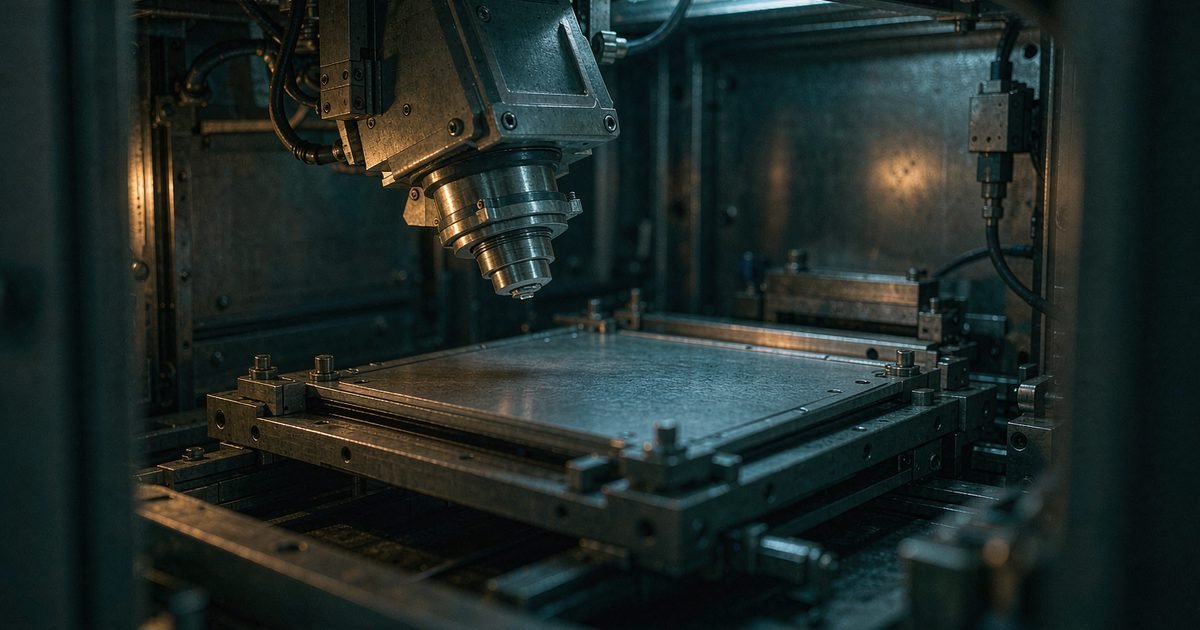
Plasma cleaning before bonding is not a second wash; it is what a process reaches for when a wet line can no longer finish the job. As interconnect pitch shrinks, the rinse stage stops reaching the gap first, and the cleaning step moves with it.
The evidence below is our own published product range rather than a press claim. CHUANGQI publishes 22 machine models, and four of them sit on the board-cleaning and dust-removal line that includes the atmospheric plasma cleaner — the tool whose published job is to strip organic contamination and activate surfaces ahead of printing, bonding or coating. Every platform we ship leaves the factory with an inspection record whose final step is a cleanliness verification on sample boards.
Key takeaways
- Shrinking pitch breaks the rinse stage before it breaks the chemistry.
- A rinse that cannot reach the gap leaves residue the board never sheds.
- Four of the 22 machine models CHUANGQI publishes sit on the plasma pre-treatment line.
- Dry pre-clean changes a surface; it does not dissolve bulk cured residue.
- Treat pre-clean as a step with a location, not only as a method.
Rinse Completeness Fails Before the Chemistry Does
Scope first: what follows applies to assemblies whose cleaning step is judged by whatever process comes next — a bond, a coating or an encapsulation. It deliberately states no interconnect dimension and no residue threshold, because both belong to a package the customer owns, and a number lifted out of a general note is how process windows get copied instead of established.
Separate the two jobs a cleaning step performs. Getting flux off the board is a chemistry problem: the fluid has to dissolve or displace the soil. Reaching that soil and carrying it out of the assembly is a transport problem. Finer geometry barely touches the first problem and attacks the second one directly, because the gap the rinse has to enter gets narrower while the path it has to travel gets longer.
That is why the failure surfaces as a rinse problem rather than a chemical one. A wash chemistry that handled a coarse-pitch board is usually still working chemistry on a fine-pitch board; what changed is how much of the assembly the rinse can actually flush.
Residue age. Residue that has been through a second reflow or a bake is harder to redissolve, so the rinse has to work on a smaller fraction of the soil even when it reaches the right place.
Gap geometry. Under a package edge or a die, the rinse has a long, narrow channel with essentially one exit. Water entering that channel displaces what is inside it only if it can leave again, and a fine gap gives it very little room to move.
Water that stays behind. Moisture trapped under a low-clearance part is its own defect source. A rinse that has done its job chemically can still leave the next step with a surface it cannot bond to, because the drying stage cannot reach the same places the rinse could not reach.
None of these three behaves like a threshold you can check off. They compound, which is why a wet line that passes on yesterday’s board can look unchanged on paper and underperform on a denser one.
The Cleaning Step Changes Place, Not Only Method
Once the rinse cannot finish the job, the practical response is positional rather than chemical: move the pre-clean into the tool that does the bonding, so the surface can be treated without a wet stage standing between the cleaning and the bond.
| Route | Where it sits in the flow | What it controls | What it cannot do |
|---|---|---|---|
| Stand-alone wet deflux | A separate wash, rinse and dry line, upstream of the bonding step | Removes bulk flux residue from the board surface and delivers rinse water at a controlled resistivity | Flush residue out of a narrow gap, or dry a cavity that the drying stage never reaches |
| Dry pre-clean at the tool | Inside or immediately ahead of the bonding step, with no wet stage in between | Strips organic film off the surface and activates it so that a bond or an encapsulant can wet it | Break down cured residue in bulk, or take over from a wash stage that left residue behind |
Source: CHUANGQI product application notes and published product-page specifications, 2026-10. The wet row describes a wash–rinse–dry sequence in general terms; the dry row describes the atmospheric plasma cleaner CHUANGQI publishes, whose listed application is surface activation and organic contamination removal.
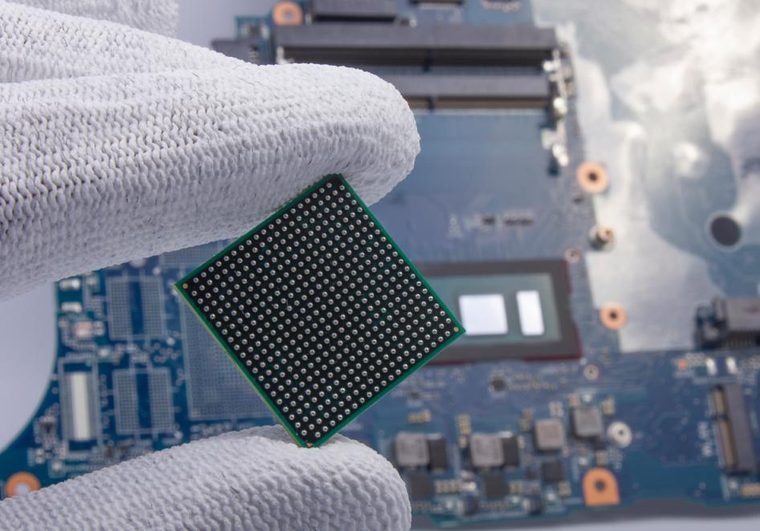
Read the last column before the other two, because it sets the order. A dry pre-clean works on whatever surface it is handed; leave a layer of flux sitting there and the plasma spends its effect on that layer instead of on the board. The two routes sit in sequence rather than in competition, and which one is the limiting step changes with the product.
The same logic applies one step further upstream. Where a surface later has to accept a coating, the pre-treatment question moves earlier in the same way, which is what pre-coat cleaning before conformal coating covers. Where the next step is specifically an underfill, the interface that decides the result is the one the last cleaning step left, which flux cleaning before underfill works through.
How to Tell Which Side Your Assembly Falls On
Five questions separate an assembly that still belongs on a wet line from one where the pre-clean has to move. They are diagnostic questions about your own process, not a checklist to score:
- Does your rinse reach the residue, or only the open area around the package edge?
- Is the residue still soluble when the rinse arrives, or has it cured through a reflow or a bake?
- Does any low-clearance part still hold moisture when the next step starts?
- Does the step after cleaning depend on surface chemistry — a bond, a coating, an encapsulant — or only on a visual inspection?
- Can this assembly tolerate a wet stage at all, or has the process already been moved to a dry sequence for other reasons?
An assembly that answers the first two questions comfortably, and does not need a chemical surface, is a wet-line part. One that struggles with the second question or depends on the fourth has a pre-clean problem that a longer rinse cycle will not solve.
| Signal on your line | Which side it points to |
|---|---|
| Residue reappears at the same package edge after every wash | Wet-side problem: the jet is being shadowed, and process tuning is still worth doing |
| Residue test coupons pass, yet the bond or the coating still fails at the interface | Dry-side problem: the surface, not the residue count, is what the next step needs changed |
| Cleaning passes, then the assembly waits before bonding | Both: a wet step can finish the board and still leave a surface that re-contaminates in the queue |
Source: CHUANGQI product application notes, 2026-10. The table maps observed symptoms onto the two routes; it sets no threshold, because the pass criterion belongs to the customer’s reliability class.
Where a Dry Pre-Clean Does Not Replace a Wet Step
Not suitable for assemblies that still carry bulk cured flux residue. A dry pre-clean changes a surface; running it over residue it cannot remove produces a treated residue, not a cleaned board. The wash stage still has to happen first (unless the process was designed without one from the start).
It is also the wrong tool where the only acceptance target is appearance. Where the board is washed only so that an inspector sees a consistent finish, and no bond, coating or encapsulation comes afterwards, fitting a dry stage changes nothing about the outcome.
Nor can it replace a trial on your own parts. A published application — surface activation and organic contamination removal on a substrate — states what the tool is for. It does not tell you whether your particular residue, your hold time between steps and your package geometry land on the right side of the boundary. The atmospheric plasma cleaner CHUANGQI builds sits on the same board-cleaning and dust-removal line as the contact and non-contact dust removal units, and the range is published at the plasma cleaner product page.
Frequently asked questions
Does a fine-pitch assembly still need a wet cleaning step?
Usually, but the wet step is no longer expected to finish the surface. On a fine-pitch assembly the wash stage removes bulk residue and the rinse delivers controlled water; whether the rinse reaches every gap is a separate question. Where it cannot, a dry pre-clean at the tool takes over the surface condition, while the wet step stays in the flow for everything the dry step cannot break down.
Can plasma cleaning replace flux removal before bonding?
No. A dry step strips organic film and changes the chemistry of the surface so that a bond or an encapsulant can wet it; it does not break down cured flux residue sitting in bulk. Whatever residue remains on the assembly when the plasma runs becomes part of what the plasma treats. Keep the wet stage in the flow, and keep the dry stage for the surface activation it is there to provide.
Why does the rinse stage fail first as pitch shrinks?
Because reaching residue is a question of transport and dissolving it is a question of chemistry. Narrower gaps and longer channels beneath a package make the rinse path harder to flush; they do nothing to weaken the chemistry. The chemistry keeps working while the water stops arriving.
Does moving pre-clean into the bonding tool remove the wet bench entirely?
Not in most flows. The dry step handles the surface condition on the way into the bond, and the wet step handles bulk residue upstream. A process designed without a wet stage from the start is a different case, and that decision belongs to the flux class and the reliability target, not to the cleaning equipment alone.
Next step: tell us what the assembly is bonded or coated with, which flux class it runs and what happens immediately afterwards. We will map your sequence against both routes and come back with a quotation within 24 hours — start a pre-clean review.