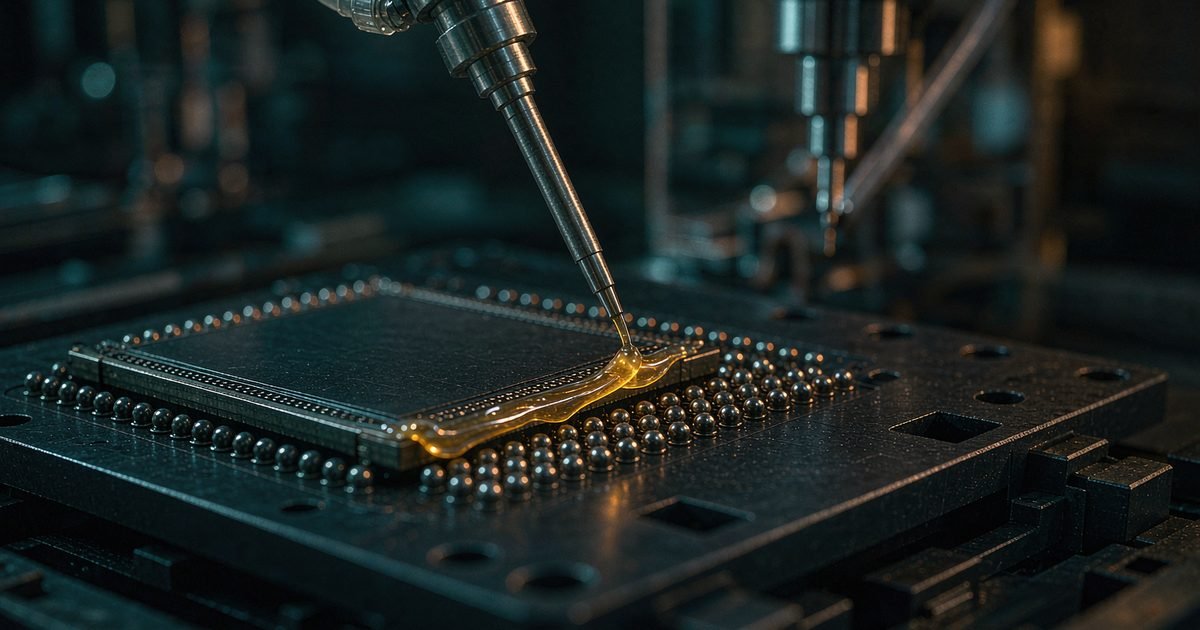
Underfill voids get blamed on the dispenser, which is usually innocent. A capillary underfill has to flow into the gap between die and substrate and wet every surface on the way, and flux residue is what stops it. Flux cleaning before underfill is the step that decides whether that gap starts clean.
CHUANGQI builds both halves of the sequence: an inline spray platform for aqueous defluxing and an atmospheric plasma cleaner that activates a surface with no wet chemistry at all. The window quoted below is the published datasheet of the CQ-C9610 inline PCBA water cleaning platform, and the factory inspection behind each platform includes an ionic cleanliness check on test boards.
Key takeaways
- Underfill wets the surface it finds; residue is what turns that surface into a trap.
- Flux cleaning and plasma activation do different jobs, and neither replaces the other.
- The CQ-C9610 platform rinses with DI water at 10–16 L/min and above 15 MΩ resistivity.
- Plasma removes organics and activates a surface; it does not dissolve cured flux residue.
- Seal the sequence before encapsulation, because afterwards there is no rework route.
What a Void Under the Die Is Really Telling You
This note covers cleaning before encapsulation on flip-chip, BGA and system-in-package assemblies, where the encapsulant is a capillary underfill that has to flow into the gap between the die and the substrate. It describes the sequence and where the sequence stops working. It states no void percentage and no gap dimension, because both belong to the package design that the customer owns rather than to a cleaning datasheet.
Start from what the underfill actually touches, because that is the list that has to be clean before encapsulation.
| Surface in the gap | What the underfill needs from it | What residue does to it |
|---|---|---|
| Die passivation and die edge | A surface the resin can wet and travel along | Residue raises surface energy barriers, so the front stalls and air stays behind it |
| Substrate solder mask | Uniform wetting across the full travel path | Uneven wetting splits the flow front, and the slower side traps air |
| Solder joints and bumps | An interface the cured resin can bond to | A contaminated interface becomes a weak layer that opens under thermal cycling |
Source: CHUANGQI process application notes, 2026-10. The table describes how each interface behaves; neither column carries a pass mark, because no single number holds across every package design.
The failure mode is quiet. A void that forms during fill does not announce itself at the dispenser, and it does not show up in a visual check of a sealed package. It appears later as a thermal or mechanical failure in the field, at which point the process that produced it has already shipped.
That is why the cleaning step cannot be sized on appearance. A board that looks clean can still carry a film that is invisible under normal light and completely visible to a resin trying to wet it.
The Two Steps Do Different Jobs: Aqueous Deflux, Then Plasma Activation
Pre-encapsulation cleaning is usually two operations, and treating them as one is where most process windows go wrong. The first step has to remove material; the second has to change the surface.
| Step | What it does | Platform | Cannot do |
|---|---|---|---|
| 1. Aqueous deflux | Washes flux residue off the assembly, with a DI-water rinse and a hot-air dry completing the pass; belt speed runs up to 1500 mm/min | CHUANGQI inline PCBA water cleaning platform (CQ-C9610): detergent 1.0–2.5 L/h, DI rinse 10–16 L/min, DI resistivity above 15 MΩ | Reach a residue the chemistry cannot wet, and clear moisture from a cavity the drying zone cannot reach |
| 2. Plasma activation | Removes organic contamination from the surface and activates it before bonding or encapsulation, with zero wet chemistry | CHUANGQI atmospheric plasma cleaner | Dissolve a cured flux residue, and compensate for a first step that left bulk residue behind |
Source: CHUANGQI product specification sheets and process application notes, 2026-10. The figures are nameplate values from the platform datasheet; none was measured on a customer build.
Read the last column before the first two, because it decides the order. Plasma activation cannot stand in for defluxing: if residue is still on the assembly when the plasma runs, the plasma treats the residue as much as it treats the board underneath. Defluxing cannot stand in for activation either, because removing the wash chemistry leaves a surface that is clean and still not ideal for wetting.
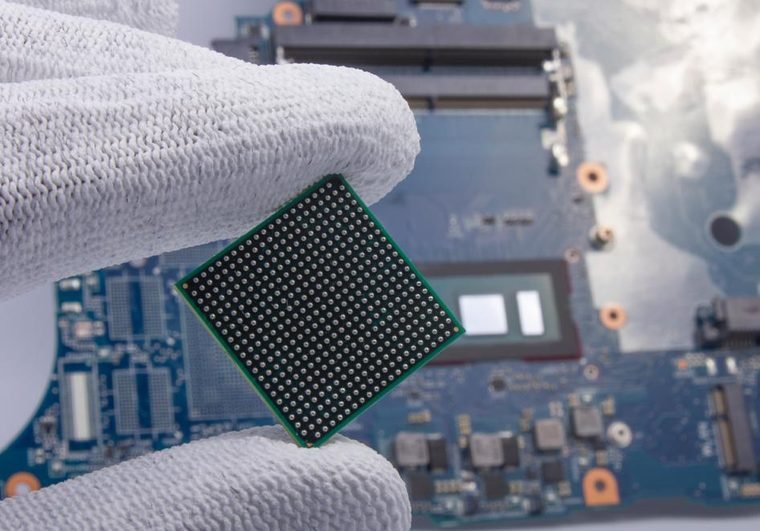
Three questions separate a sequence that works from one that only looks correct. Does the wash stage reach the flux class actually on the board, or only the easy area around the package edge? Does the rinse leave water at a resistivity the finest features on the substrate tolerate? And does the dry stage clear moisture from under every low-clearance part before plasma starts, since a wet surface is the one thing an atmospheric plasma cannot treat?
If the open question is still whether a residue has to be removed at all, the no-clean decision framework works through that call, because encapsulated packages are one of the cases where the answer changes. The two platforms referenced above are the atmospheric plasma cleaner and the CQ-C9610 inline PCBA water cleaning platform.
Where This Sequence Stops Applying
Not suitable for assemblies that are cleaned only for a cosmetic inspection before encapsulation: there the acceptance target is appearance, the rinse specification can be relaxed, and running a plasma stage adds a process step without adding a result.
Two further situations fall outside the sequence. It does not apply where the encapsulant is not a capillary flow material, because a moulded or dispensed-only encapsulant does not depend on the same wetting path and the cleaning target moves with it. And it cannot stand in for a trial on your own package: a published platform window settles whether a machine swallows your envelope, your flows and your rinse quality, not whether your particular residue comes off before your particular underfill.
Frequently asked questions
Does every flip-chip assembly have to be cleaned before underfill?
No, and the decision depends on the flux class and on what the encapsulant has to wet. A residue that stays inert under an enclosure is a different risk from a residue sitting between a bump and the resin that has to bond to it. Where the underfill has to travel across the surface, the answer usually moves toward cleaning.
Can plasma cleaning replace defluxing before underfill?
No. Plasma removes organic contamination and activates the surface, but it does not dissolve bulk cured flux residue. If residue is present when the plasma runs, the plasma treats the residue as part of the surface. Run the wash, rinse and dry stage first, then use plasma for the surface condition it was built to change.
How do I know a surface is ready for underfill?
Check the two steps separately rather than the package as a whole. Confirm that the wash stage reaches the flux class on the board, that the rinse water lands at the resistivity your tightest features want, and that the drying zone pulls moisture out from beneath each low-clearance part before plasma starts. A single pass-or-fail result hides which step is the limiting one.
How long can a cleaned assembly wait before underfill?
That window belongs to your process and your shop environment, not to a datasheet, so it has to be established on your own line. What matters is that the hold time is defined, recorded, and short enough that the surface the underfill meets is still the surface the cleaning sequence produced.
Next step: send the package type, the flux class and what the next step after cleaning is, and we will confirm which combination of aqueous defluxing and plasma activation fits that flow — open a pre-underfill cleaning review and receive a quote within 24 hours.